
How to Search Madison County Court Records
Madison County court records begin with the North Carolina eCourts Portal. The portal includes Smart Search, hearing search, payment tools, and NC Judgment Search for public records in eCourts counties. Anonymous public users may search without registration, though the portal requires JavaScript, cookies, and a CAPTCHA about every ten minutes. Registered accounts are mainly for saved-case tools, while elevated access is only for users with legal authority to view restricted case types or non-public data.
The Judicial Branch court-record guide keeps the clerk route in the process. A portal result can help locate a Madison County case, but paper files, certified copies, older records, and background-check searches should be handled through the Clerk of Superior Court in the county where the case is filed.
- Open Smart Search and enter a case number or a name in the Last, First Middle Suffix format.
- Use the location filter and choose Madison County when a statewide name search returns too many results.
- Expand Advanced Filtering Options for party, business, case type, case status, date, booking, or SO number filters.
- Use Search Hearings when the need is a court date, courtroom, judicial officer, or attorney search.
- Contact the Clerk of Superior Court for public terminal access, paper-file review, copies, and copy fee questions.
The North Carolina court records help topic describes the official court-record access framework used statewide.
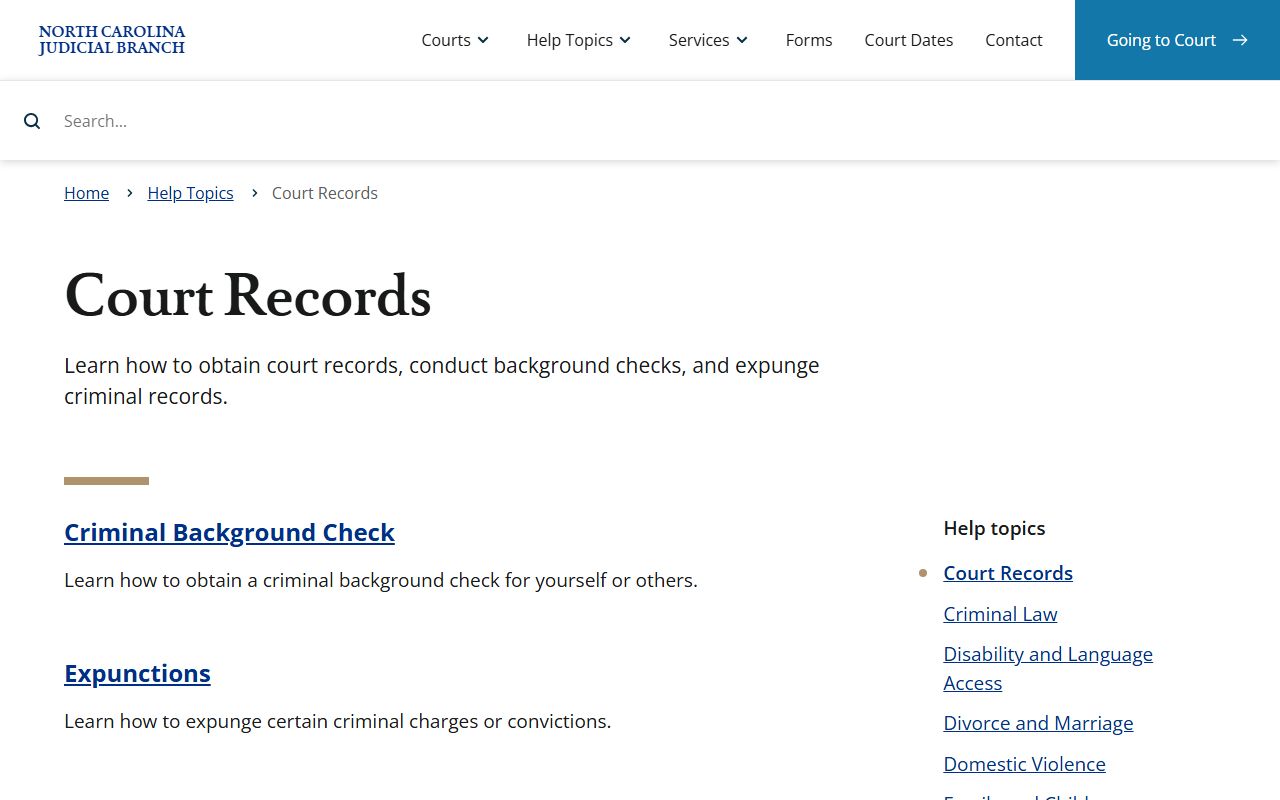
That statewide help page supports the same split used in Madison County: online search first, then the Clerk of Superior Court for official court files.
Madison County Court Records Search Fields
The Smart Search page has broad search fields because it is not limited to one court type. For Madison County court records, the most useful fields are record number, party name, Madison County as the location, case type, case status, and file date range. Wildcard rules matter. The Portal training material says a case-number wildcard needs at least four characters plus an asterisk, a last-name wildcard needs at least three characters plus an asterisk, and a first-name wildcard needs at least one character plus an asterisk.
| Field Label | Type | Required | Notes / Format |
|---|---|---|---|
| Record Number or Name | Text | One criterion | Use case number or Last, First Middle Suffix name format. |
| Last Name / First Name | Text | Conditional | Wildcard name search follows the Portal character rules. |
| Filter by Location | Dropdown | No | Select Madison County to narrow statewide results. |
| Search by | Option field | No | Party Name, Nickname, Business Name, or Sounds Like. |
| Case Type / Case Status | Dropdown | No | Useful for civil, criminal, family, small claims, estate, judgment, or disposed cases. |
| File Date Start / End | Date | No | Narrows Madison County court records to a filing date range. |
The North Carolina legislature's Chapter 132 public records index is a source for the public-record rules that sit beside court-specific access law.
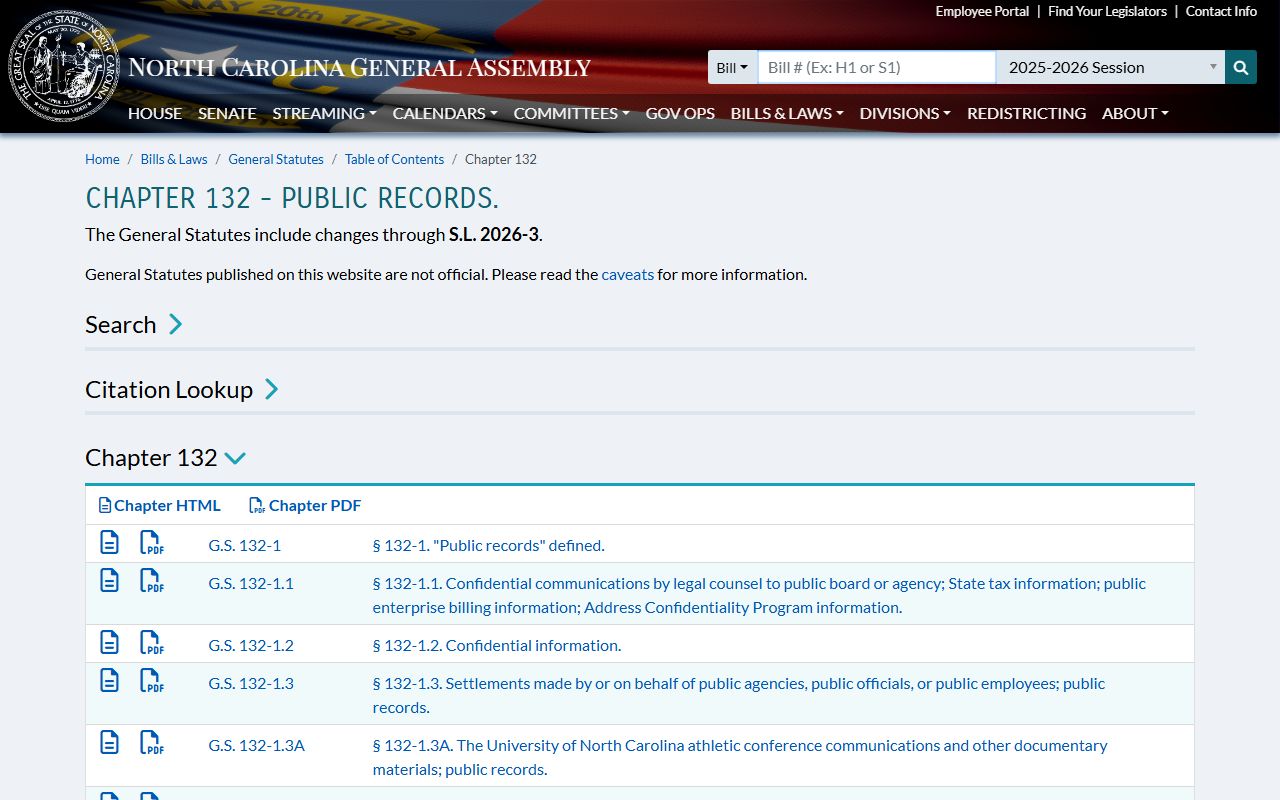
Chapter 132 helps explain county public records, while court files still rely heavily on the Clerk of Superior Court and court-record statutes.
Types of Madison County Court Records
Madison County court records are produced through North Carolina's unified court system. District Court handles misdemeanors, infractions, divorce, child custody, child support, juvenile matters, civil cases below the Superior Court threshold, small claims, and magistrate matters. Superior Court handles felony cases, higher civil cases, jury trials, and appeals from District Court in many case types. The Clerk of Superior Court maintains court files, dockets, indexes, papers, estate records, and public terminal access.
Record type controls the search path and the likely access limits. Civil and small claims files may show complaints, summonses, answers, motions, orders, judgments, notices, and dismissals. Criminal files may show citations, warrants, magistrate orders, conditions of release, indictments, pleas, judgments, sentences, and docket entries. Estate records are handled by the Clerk of Superior Court acting as probate judge. Divorce judgments are copied from the clerk in the county where the divorce was granted. Marriage, land, notary, birth, and death records are Register of Deeds records, not court records.
- Civil records cover claims, answers, motions, orders, judgments, and financial judgment entries.
- Criminal records cover charges, hearings, pleas, dispositions, sentences, costs, and probation terms.
- Family records include divorce, custody, support, and related orders, with privacy limits in sensitive filings.
- Estate records include wills filed after death, applications, letters, inventories, accountings, and clerk orders.
- Traffic and infraction records are court files, separate from DMV driver-history records.
What Madison County Court Records Show
A Madison County case summary can show the case number, court location, case type, parties, filing date, status, docket timeline, assignment information, hearings, dispositions, financial entries, and document access where public. Portal training calls the timeline a case summary or register of actions. It can include case events, hearings, financial information, dispositions, and document attachments, but access depends on public-access rules and whether a user has elevated authority.
| Field | What It Shows |
|---|---|
| Case Number | Enterprise Justice format with year, case-type letters, sequence number, and county identifier. |
| Parties | Plaintiff, defendant, State, petitioner, respondent, decedent, representative, landlord, tenant, or other role. |
| Docket / Register of Actions | Chronological filings, hearings, orders, dispositions, and financial events. |
| Hearings | Date, time, court location, judicial officer, courtroom, and related case information when public. |
| Disposition | Outcome of a claim, charge, judgment, or proceeding. |
| Financial Information | Court costs, fines, restitution, attorney fees, judgments, interest, or payment status when applicable. |
The G.S. 7A-109 court recordkeeping statute is central for Madison County court records because it addresses clerk-maintained records, dockets, indexes, and public inspection.
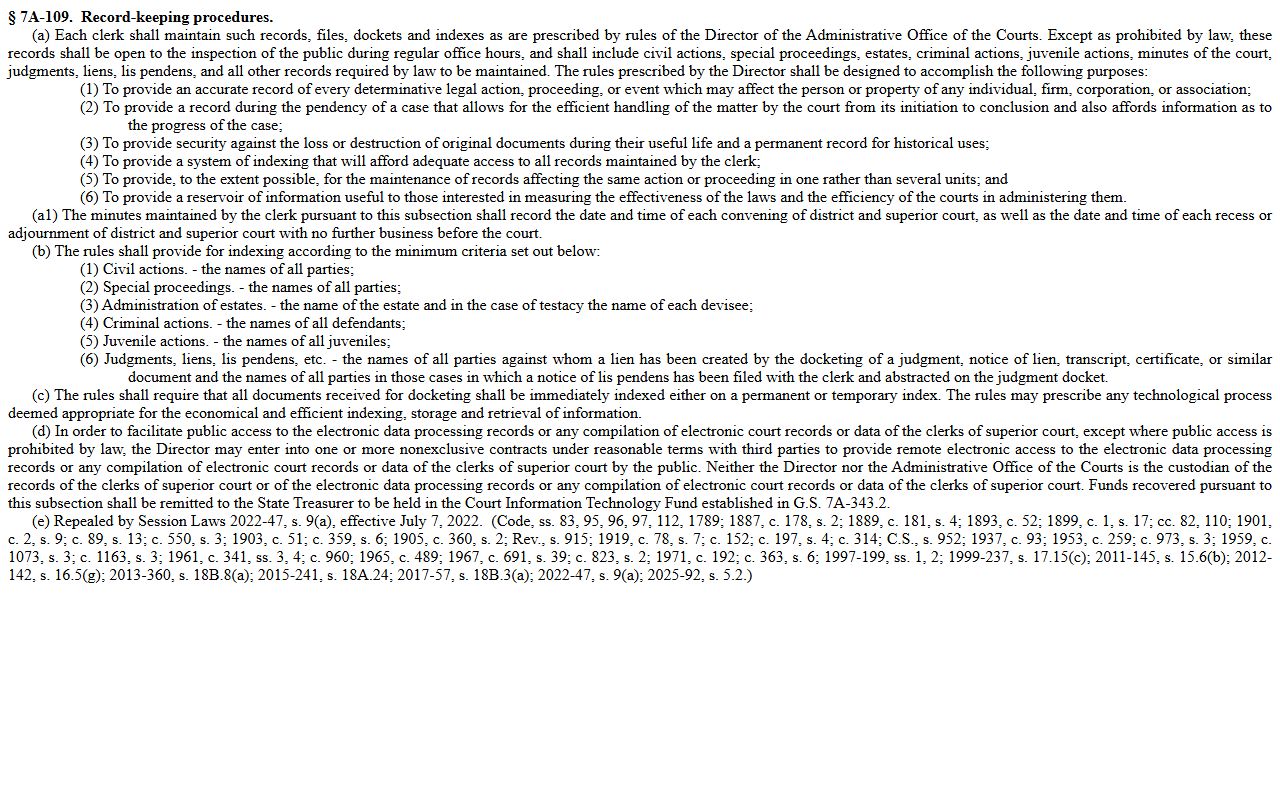
That statute is why the clerk's counter, public terminals, and paper files remain part of the access path even when Portal search is available.
Public Access for Madison County Court Records
North Carolina public-record law applies broadly. G.S. 132-1 defines public records as materials made or received in connection with public business, and G.S. 132-6 requires inspection and copies at reasonable times upon payment of lawful fees. For court files, G.S. 7A-109 gives the Clerk of Superior Court a more specific recordkeeping and inspection role.
Madison County also has a county public-record request page for non-court county records. That page says requesters should use the request form, describe the records in detail, and email the completed form to the county. It also warns that request information may be disclosed on the county open-data page. Sheriff's Office records are routed to the sheriff-specific request path. Court files, divorce judgments, estates, and certified court copies should go through the Clerk of Superior Court instead.
Note: Portal search is not a substitute for clerk-certified copies when a court or agency requires official proof.
The plain public-record definition in G.S. 132-1 helps frame access to Madison County public records beyond the court file.
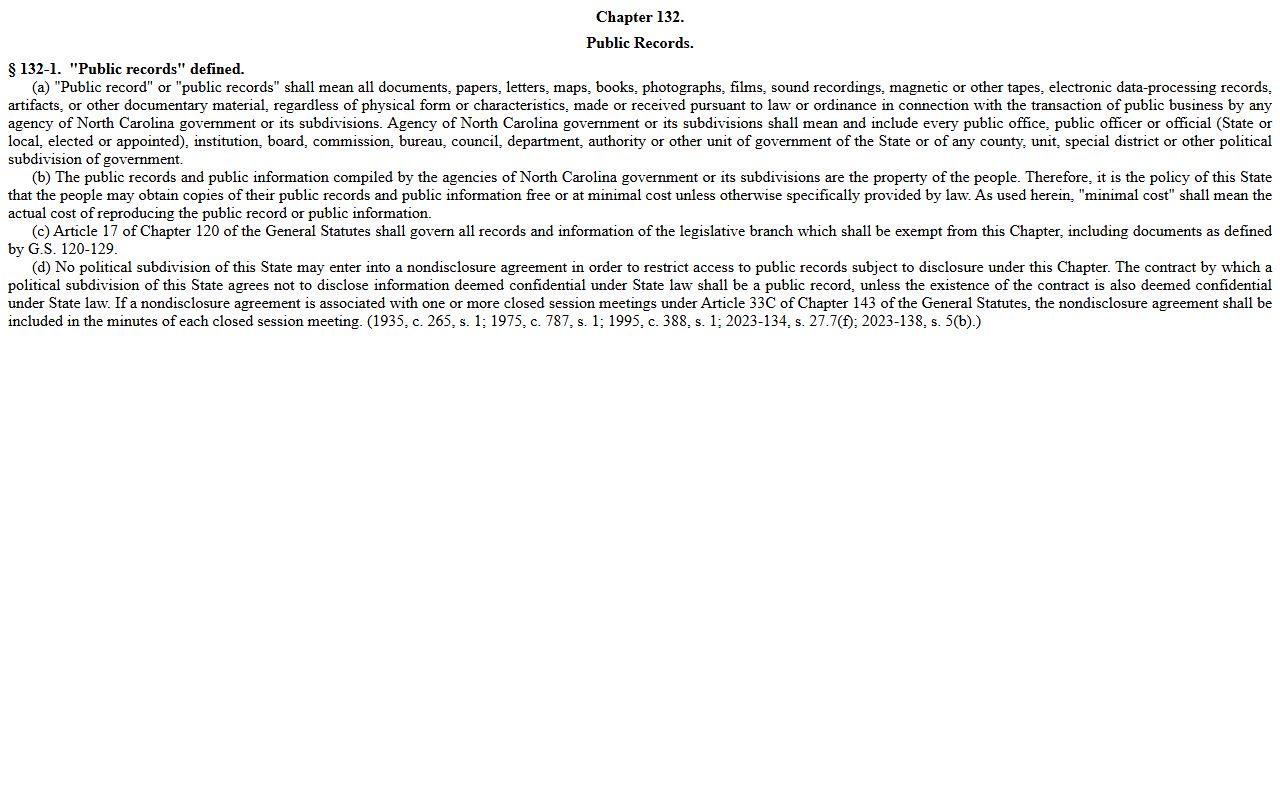
That law is broad, but court users should still use court-specific channels when the record is a Madison County case file.
Restricted Madison County Court Records
Not every Madison County court record is public online. Juvenile court records are confidential under G.S. 7B-3000, except for access allowed by law or court order. Sealed cases and sealed documents do not appear through ordinary public search. Expunged criminal records are removed from ordinary public access after the court grants relief and the required processing is complete. Adoption and some mental health matters should not be treated as open public files.
Criminal investigation records are different from criminal court records. G.S. 132-1.4 limits records of criminal investigations and intelligence information, even when a related court case is visible. Personal identifying data can also be redacted or restricted. A person seeking sealed or restricted Madison County court records usually needs party status, attorney authority, a statute granting access, or a court order.
The Chapter 7B juvenile code index is the statute source for juvenile confidentiality rules that affect Madison County court records.
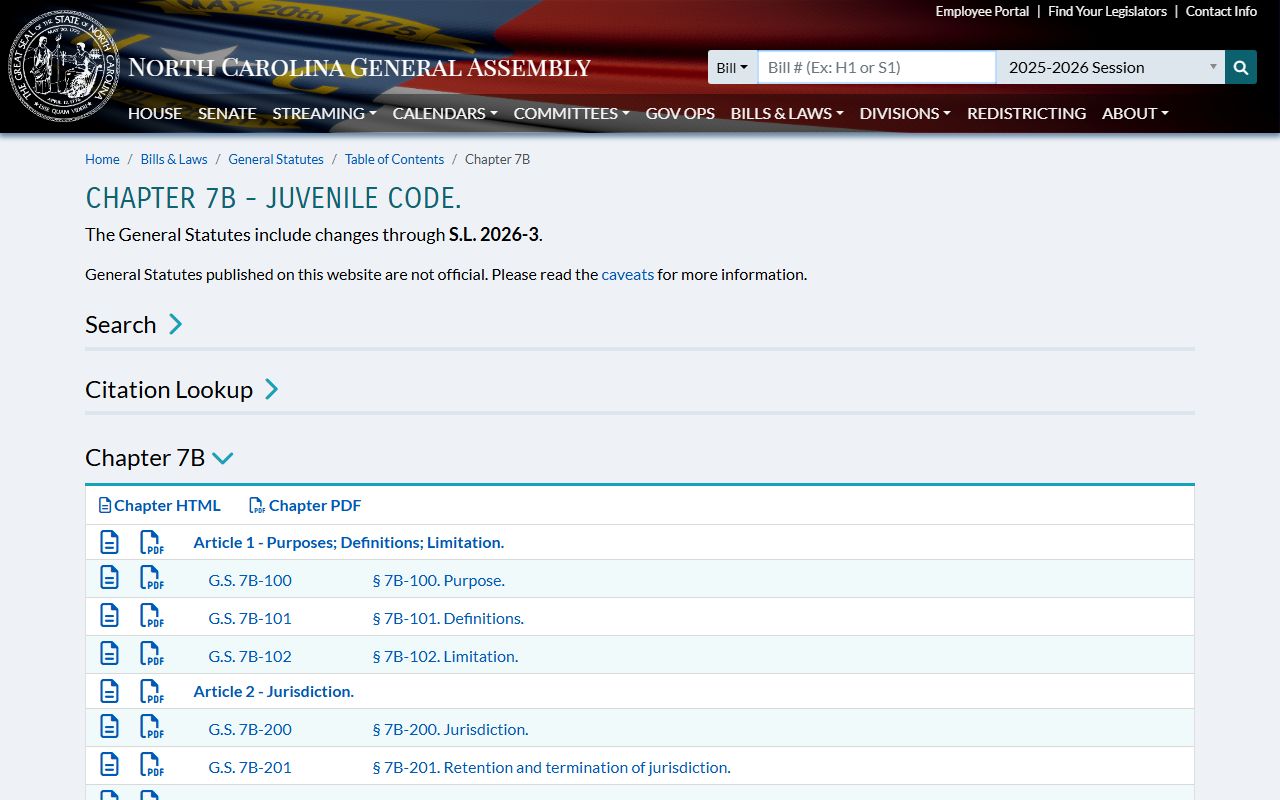
That juvenile-code material keeps Madison County juvenile records separate from ordinary civil, criminal, traffic, and estate searches.
Madison County Court Record Requests
The official Judicial Branch courthouse page says the Clerk's Office and temporary courthouse are located at the Madison County Extension Office, while the courthouse at 2 North Main Street is closed until further notice. Court users should verify the current location before visiting. The detailed courthouse hours block lists 8:30 a.m. to 5:00 p.m. Monday through Friday, and the main clerk phone is the best first contact for paper files, public-terminal questions, older records, copies, and payment issues.
Madison County Clerk of Superior Court
Madison County Extension Office
258 Carolina Lane
Marshall, NC 28753
(828) 649-2200
Detailed hours block: 8:30 a.m. to 5:00 p.m., Monday through Friday